Repair or Replace a Damaged Panel?
One dented section doesn't automatically mean a whole new door. Here's the honest, no-guesswork way to figure out whether a single panel repair holds up or whether replacement is the smarter call.
What Actually Happens When a Panel Gets Damaged
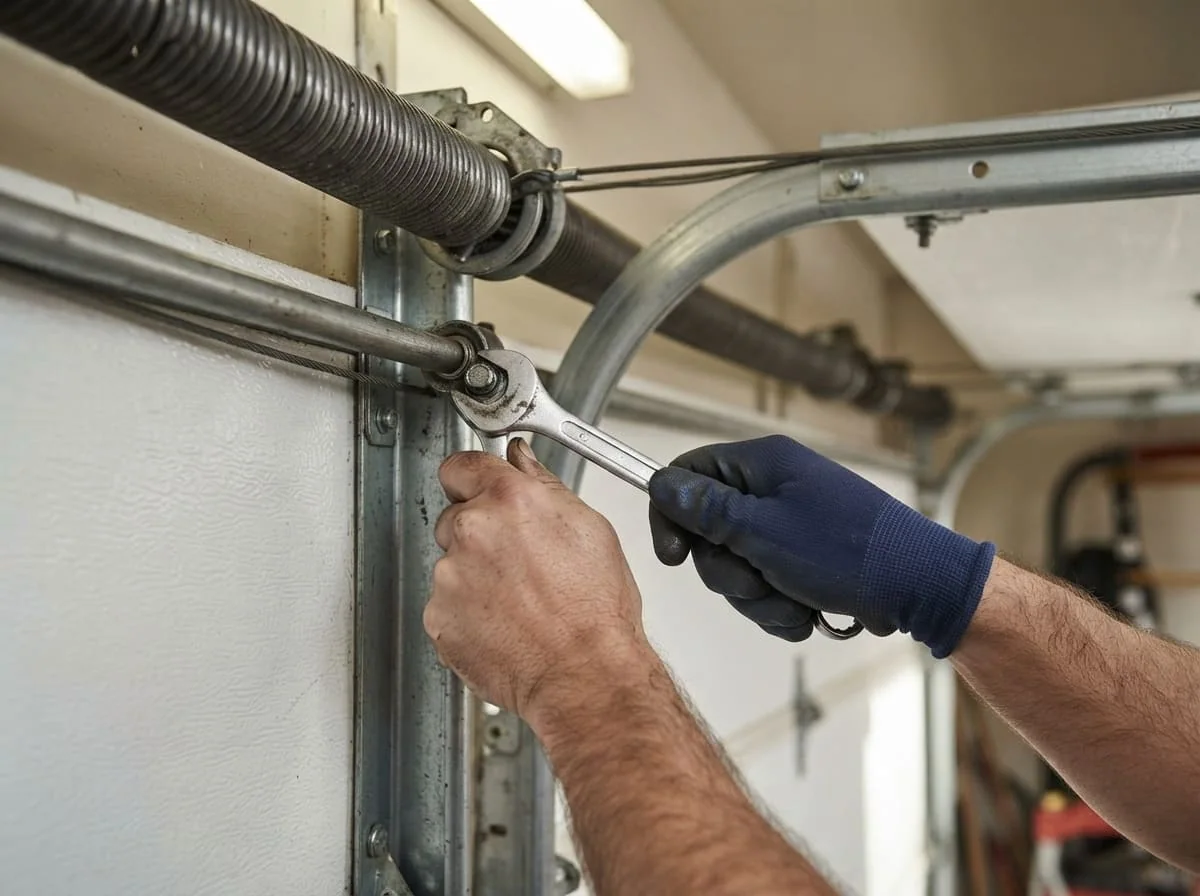
Most residential garage doors are sectional doors, meaning the door isn't one solid slab but a stack of individual horizontal panels, usually four or five per door, hinged together at the sides. Each panel is typically a steel or aluminum skin over a foam insulation core, though some older doors around Peoria's West Bluff and other established neighborhoods still have solid wood sections. The panels ride in vertical tracks on rollers, and the whole stack curves up and back along the horizontal track when the door opens.
That construction matters because a panel isn't just a cosmetic face plate. It's a structural member. When the door cycles, the torsion spring system and the track put real load through every hinge point, and each section has to hold its shape and its hinge alignment for the door to travel smoothly. A backed-into dent, a puncture from a stray branch or thrown object, a cracked seam, or rust-through at the bottom edge where road salt and snowmelt collect all change how that one section behaves under load, even if the rest of the door looks fine.
So the real question isn't "how bad does it look." It's whether the damage is cosmetic and isolated, or whether it's changed how that section sits in the track and hinges to its neighbors. Those are two very different repair jobs.
The Case for Just Fixing the One Panel
When the damage is limited to a single section, the hinges on either side are still true, the rollers are still tracking straight, and the door still opens and closes level, a single-panel swap is usually the right, no-surprise call. It's most straightforward on doors that are still relatively young, where the section profile, embossing pattern, and color are still something we can source and match without guesswork.
This is the repair we do most often after the obvious stuff: someone clips a corner backing a trailer out, a basketball or a chunk of ice from the roofline dents a lower section, or a bottom panel rusts through from years of splash-back before anyone notices. If the rest of the door is structurally sound, replacing that one section is faster and more cost-effective than tearing out a door that's otherwise doing its job fine.
| Panel repair usually fits when... | Full replacement usually fits when... |
|---|---|
| Only one section is damaged | Two or more sections are damaged or fatigued |
| Door is still tracking level and quiet | Door is already binding, sagging, or noisy elsewhere |
| Section profile/hardware is still available | Panel design is discontinued or no longer matches |
| Door is younger, in good overall shape | Door is already old and due for retirement |
When Matching a Panel Gets Complicated
Matching sounds simple until you actually try to do it. Paint fades unevenly over years of sun exposure, so a factory-fresh replacement panel dropped in next to five or six years of weathered neighbors can look noticeably different even when it was ordered in the same color code. That's a cosmetic issue, not a structural one, but it's worth knowing upfront so nobody's surprised standing in their own driveway.
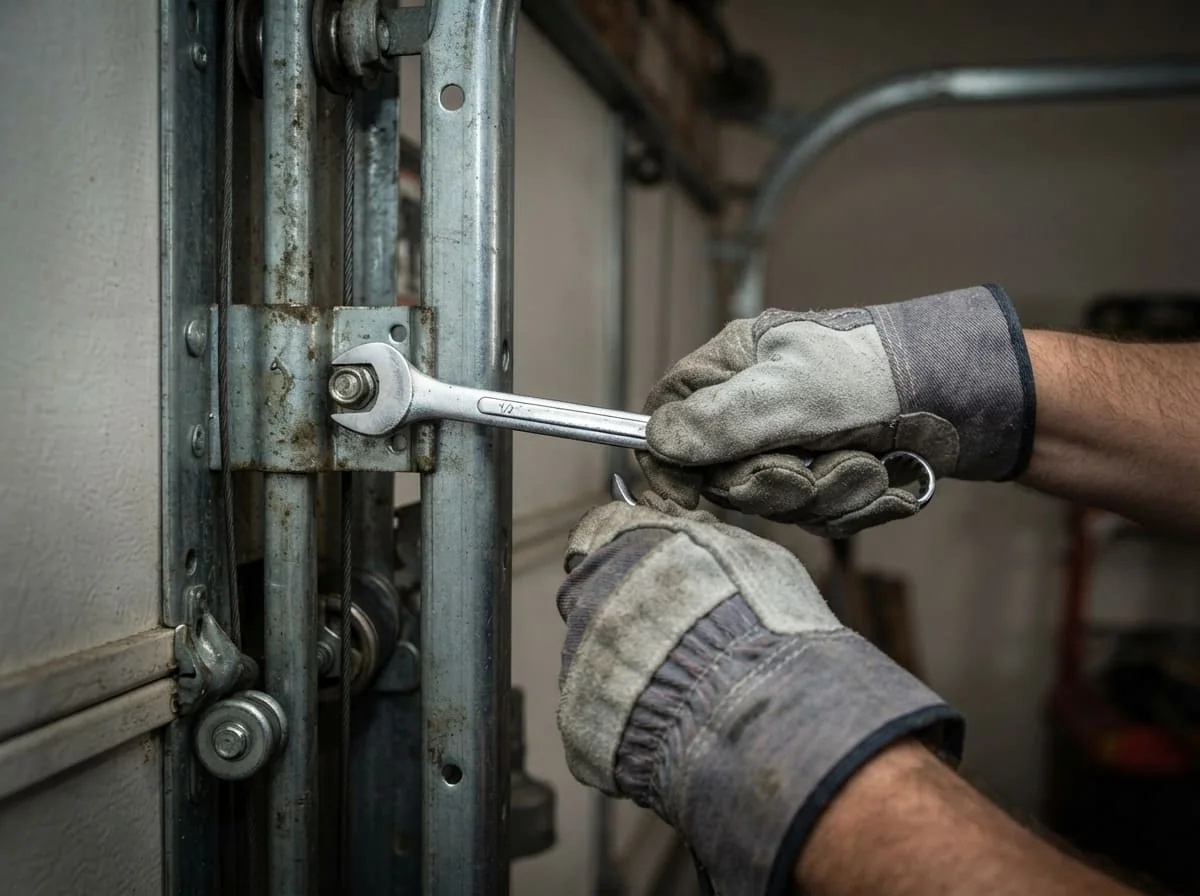
The bigger complication is that manufacturers revise panel profiles, embossing patterns, and insulation core thickness across product generations. A door installed eight or ten years ago may use a section design that's since been discontinued or altered, which means a same-brand panel ordered off today's lineup may not match in height, embossing depth, or hardware hole spacing, even if the color name is identical. Before we order anything, our crew checks section height, embossing pattern, and hole spacing against the existing panels, not just the paint swatch, because that's where a repair quietly turns into a mismatch nobody's happy with.
None of this means matching is impossible. It means it needs an actual look at the door in person rather than a guess over the phone, which is part of why we don't quote panel work sight unseen.
Signs the Damage Goes Deeper Than the Panel
Before you commit to a single-panel repair, it's worth checking for a handful of signs that the impact did more than dent sheet metal. These are the things our techs check for on every panel call, because they change the whole scope of the job:
- The door doesn't sit level, or one side looks lower than the other when it's down.
- You hear new grinding or popping near the hinges close to the damaged section.
- Rollers are riding rough, hopping, or binding in the track.
- There's a visible gap at a seam between panels that wasn't there before the impact.
- The opener is straining, reversing partway, or working noticeably harder than usual.
- A lift cable near the damaged section looks twisted, frayed, or uneven side to side.
Any of these means the impact likely knocked something out of alignment beyond the panel itself, whether that's a hinge, a roller, the track, or the balance the torsion spring is set to. A door that's out of balance forces the spring and the opener to work outside the range they were set up for, which shortens the life of both and, more importantly, changes how the door behaves if something else lets go. If you're seeing any of this, it's worth having it looked at alongside our off track garage door repair and torsion spring repair work rather than treating it as a standalone panel swap.
When Full Replacement Actually Makes More Sense
There's a point where fixing one panel is just delaying the inevitable, and it's worth being straight about that rather than selling a patch job that won't hold. A few situations where we'll usually recommend replacing the whole door instead of chasing a panel repair:
More than one section is damaged. Once you're replacing two or three panels to match, you're often within striking distance of the cost of a new door anyway, without the risk of a mismatch.
The door is already old and showing its age elsewhere. Weatherstripping that's cracked and stiff, hardware that's loose at every hinge, an insulation core that's compressed or delaminating, a finish that's chalking across every section, not just the damaged one. A panel repair on a door that's otherwise near the end of its practical service life is money spent on a door you'll likely be replacing again soon regardless.
You want better insulation anyway. If the damaged panel forces the conversation, it's a reasonable moment to ask whether the door's current insulation still makes sense for an attached garage in a Peoria winter. We've written more on that specifically in our guide to insulated garage doors and R-value in Illinois, but the short version is that a heavily used door original to an older home is sometimes worth upgrading rather than patching.
Safety Considerations You Shouldn't Skip
A damaged panel isn't just an eyesore. The U.S. Consumer Product Safety Commission has long tracked garage doors as a source of home injuries, mostly around pinch points at panel seams and entrapment under a door that doesn't sense an obstruction correctly. A section with a torn or curled edge from an impact can create a sharper pinch point at that seam than the door had when it left the factory, which matters most for households with kids or pets who don't know to keep clear.
There's also a structural angle worth understanding. Garage doors sold in the U.S. are generally built to meet ANSI/DASMA 102, the industry standard covering structural performance of sectional doors, including their ability to hold up under wind load. A section that's dented, cracked, or rusted through no longer performs the way it did when new, and that matters more than people expect once a door is facing real wind pressure, not just sitting closed on a calm day. If a damaged panel is on a door that regularly takes wind broadside, it's worth having it checked rather than assuming a dent is purely cosmetic.
Peoria's Climate Adds Its Own Wrinkle
Central Illinois doesn't make this decision easier. We get real temperature swings here, cold enough winters for roughly 26 inches of snow a year on average and plenty of freeze-thaw cycling, plus hot, humid summers and the kind of spring severe weather that NWS Lincoln tracks for this whole forecast area, including straight-line wind and hail events that can dent multiple sections at once rather than just one.
Freeze-thaw cycling is rough on any crack or seam gap that's already there, since water gets into it, freezes, and widens it a little more each cycle. Road salt and snowmelt splashed up from the driveway accelerate rust at the bottom edge of the lowest panel, which is exactly where we see rust-through most often on older doors around town, especially detached garages and unheated spaces where moisture sits longer. None of this is a reason to panic over a small dent, but it is a reason not to let panel damage sit through a Peoria winter without a look, since the same conditions that caused it can make it worse fast.
What a Straight Answer From a Quote Should Include
I spent years installing and repairing doors for a company out of Chicago that treated Peoria like an afterthought, and one of the things that bothered me most was how often a phone-quoted job turned into something different once a truck actually showed up. That's a big part of why Ray and I do this differently now that it's our own shop.
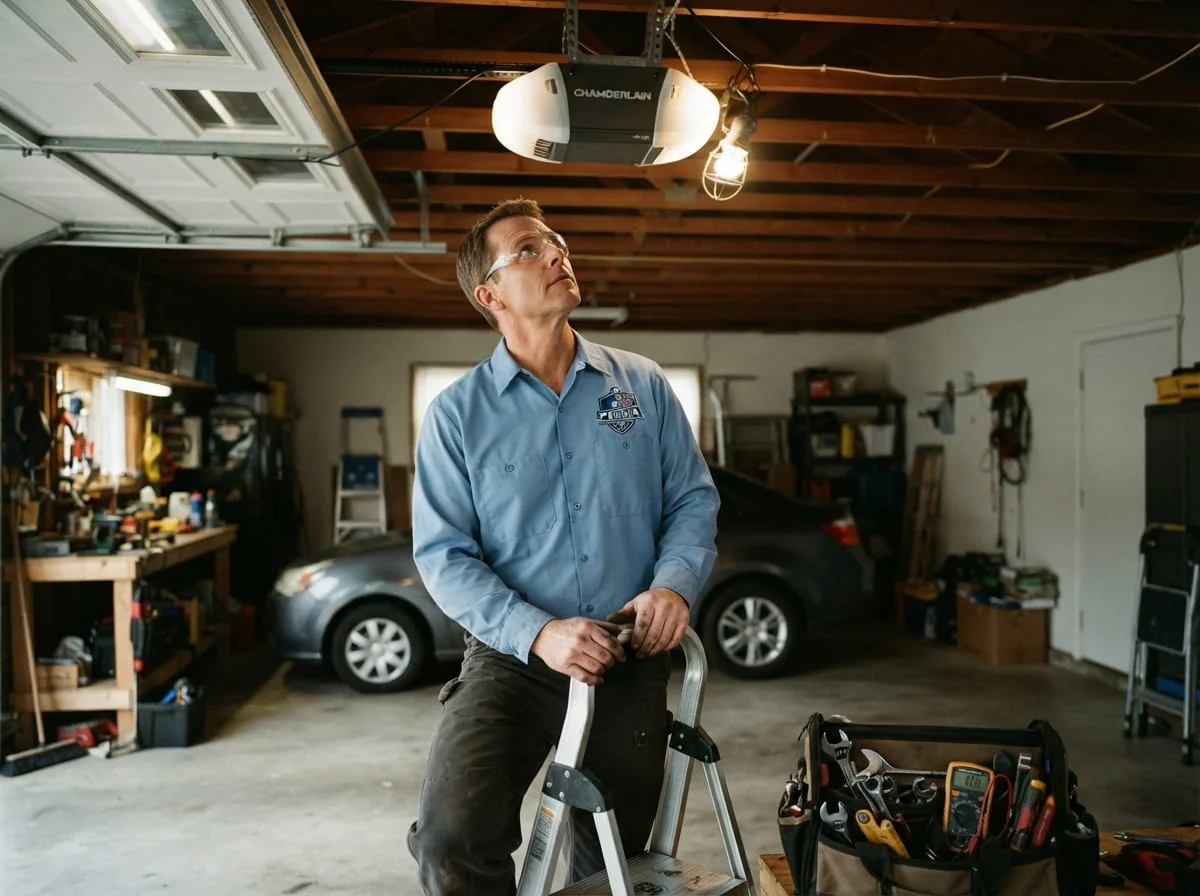
A legitimate panel assessment means someone actually looks at the section in person, checks the hinges, rollers, and track on either side of it, verifies the door is still balanced, and then gives you a straight answer: this is a clean single-panel repair, this needs two sections to match right, or honestly, at this age and condition, replacing the whole door makes more sense than chasing a patch. That's paired with a free upfront quote and no-surprise pricing before any work starts, not a number that grows once the truck's in the driveway.
DIY Panel Swaps: What to Know Before You Try
Some panel work is genuinely within reach for a handy homeowner, touching up a scuff, tightening a loose hinge screw, or cleaning rust off a spot that hasn't gone through the metal yet. Full section replacement is a different animal, and it's worth understanding why before you get into it.
Sectional doors on a torsion spring system store real force in that spring, and removing panels, especially ones tied to the bottom brackets and lift cables, means working around a door that's under active tension. Getting that wrong is how people get hurt, which is exactly why our crew treats spring and structural work as a job for insured, background-checked technicians rather than a weekend project. Beyond the safety piece, there's the practical matching problem we covered above: hole spacing, section height, and hardware type all have to line up, and a hardware-store universal panel rarely does. If you're not sure whether your situation is a simple cosmetic fix or a structural one, that's exactly the kind of thing worth a second set of eyes before you start unbolting hinges.
Danny Kowalski
Owner and lead technician at Peoria Garage Door Repair Guys, serving Peoria, IL since 2015.
FAQs
Can just one garage door panel actually be replaced, or does the whole door have to come off?
In most cases, yes, a single section can be unbolted from its hinges and replaced without touching the rest of the door, as long as the surrounding hinges, rollers, and track are still in good shape and the section profile is still available to match.
Will a new replacement panel match the rest of my door?
It should match in shape and hardware if we source it correctly, but color can be a little off due to years of sun fading on the existing panels even when the paint code is identical. We'll be upfront about that possibility before ordering anything.
Is a dented panel just cosmetic, or is it actually a safety concern?
It depends on the dent. A shallow cosmetic ding usually isn't urgent, but a dent that's cracked a seam, curled an edge, or pushed a section out of alignment with its neighbors can create a sharper pinch point and reduce how well that section holds up under wind load, so it's worth having it looked at rather than assuming.
How do I know if my whole door needs replacing instead of just the damaged panel?
The clearest signs are damage across more than one section, a door that's already sagging, binding, or noisy elsewhere, or a door that's old enough that other parts, weatherstripping, hardware, insulation, are already showing their age. One clean, isolated dent on an otherwise healthy door usually points to a repair instead.
Does the age of my garage door change whether panel repair makes sense?
Yes. Newer doors are far easier to match and are usually worth repairing. Older doors, especially ones where the section design has since been discontinued, can be harder to match well, and if the door is already near the end of its useful life, replacement is often the more practical long-term call.
Will a damaged panel affect how my garage door opener works?
It can. An out-of-round or misaligned section changes how the door sits in the track, which can throw off the door's balance and make the opener strain, reverse partway, or work harder than it should. If you're noticing opener trouble alongside a dented panel, it's worth having both checked together.
Have a Garage Door Problem Right Now?
Skip the guesswork — call Peoria Garage Door Repair Guys for a fast, honest diagnosis.