
Broken Spring Repair in Peoria, IL
A loud bang from the garage and a door that won't budge almost always means a broken spring — our crew handles same-day replacements across Peoria with a free upfront quote.
- Locally owned since 2015
- Insured, background-checked techs
- Free upfront quotes
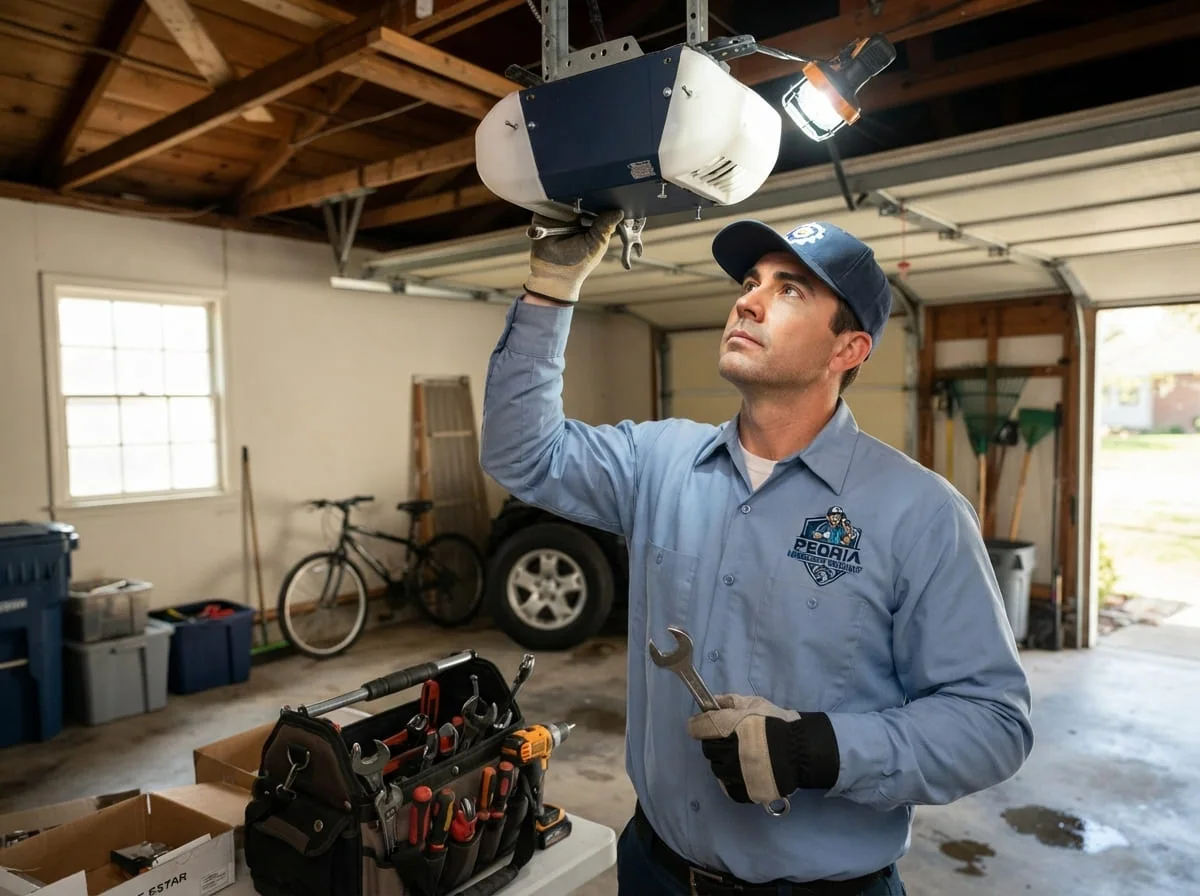
If your garage door won't lift, or you heard a sharp crack from the garage before it locked up entirely, a broken torsion or extension spring is the most likely cause. These springs carry the entire weight of the door — often 130 to 400 pounds on a standard sectional door — and they're wound under enough tension that a failed one isn't a project for a Saturday afternoon toolbox fix. It's a job for someone who does it every day.
Danny Kowalski and the crew at Peoria Garage Door Repair Guys have been replacing springs on doors all over the Tri-County Area since 2015, from older two-spring torsion setups on West Bluff's period homes to newer single-spring systems out in Dunlap and Germantown Hills. We carry spring stock sized for the sectional and residential doors most common in this area, so most calls end with a working door the same visit.
Central Illinois winters are hard on springs specifically. Cold makes steel more brittle and less forgiving of the thousands of open-close cycles a spring sees over its life, which is why we see a real jump in broken-spring calls every year once temperatures drop and stay down. If your door has been getting noisier or harder to lift over the past few weeks, that's usually the spring telling you it's close to the end before it actually lets go.
Signs Your Spring Is Broken (or About To Be)
A fully broken spring is usually obvious: a loud bang (sometimes homeowners mistake it for a car backfiring or something hitting the house), then a door that won't open at all, or that opens a few inches and stops as the opener strains against dead weight it was never meant to lift alone. But there are warning signs before total failure, and catching them early can mean a controlled repair instead of an emergency one.
- A visible gap in the coiled torsion spring above the door, or one half hanging loose
- The door feels noticeably heavier than usual when lifted by hand with the opener disconnected
- Increased rattling, grinding, or a scraping sound during operation
- The door opens crooked or at an angle instead of lifting evenly
- The opener strains, stalls, or reverses partway through the cycle
- Visible rust or a stretched-out look to the coils compared to when the door was installed
If you notice any of these, it's worth getting a technician out before the spring fails completely, ideally somewhere the door is stuck in a position that blocks your vehicle or leaves the garage open and exposed.
Torsion vs. Extension Springs
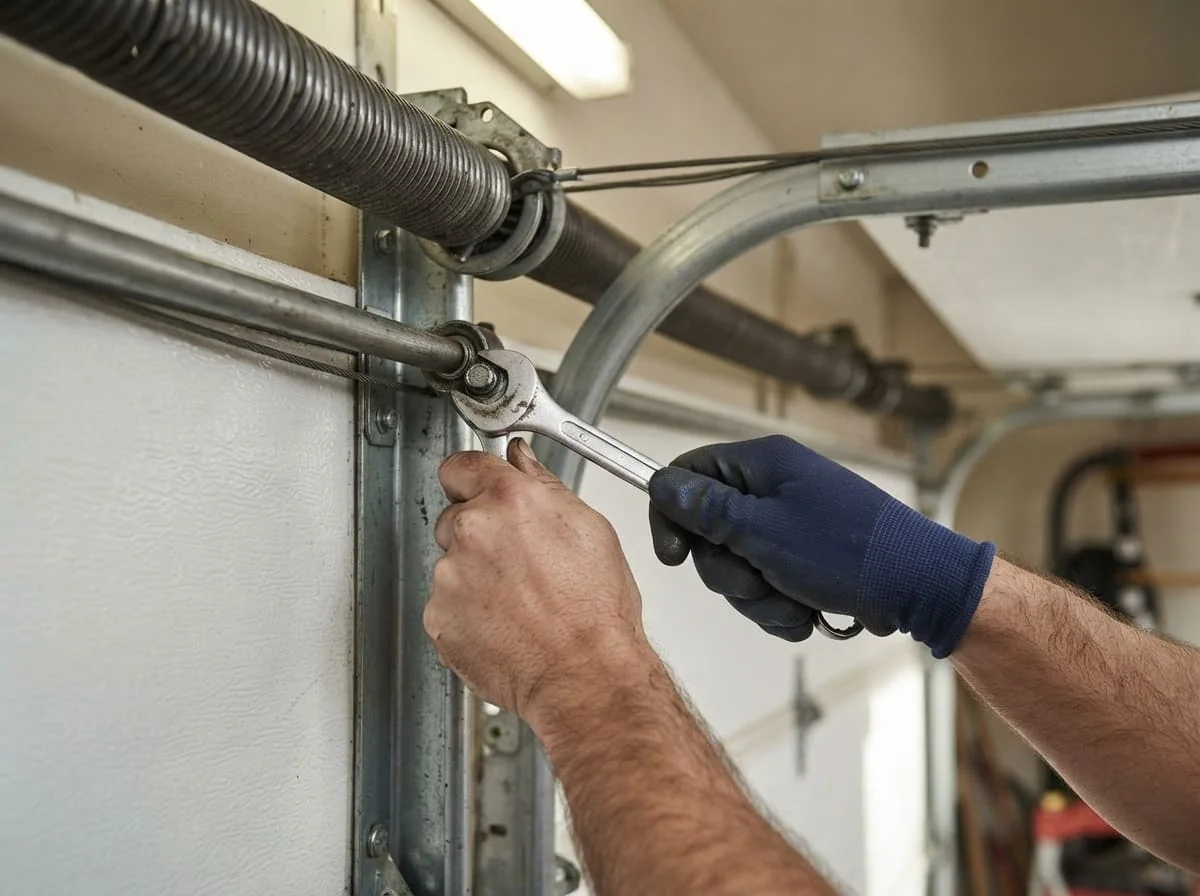
Most sectional garage doors in the Peoria area use one of two spring systems, and knowing which one you have helps set expectations for the repair. Torsion springs mount horizontally on a shaft above the door opening and wind up tension as the door closes; they're the more common setup on newer installs and tend to last longer and distribute stress more evenly. Extension springs run along the horizontal tracks on either side of the door and stretch to store tension; they're more common on older installations, including a fair number of the period homes around West Bluff and Uplands.
Both systems are rated for a set number of open-close cycles (often in the 10,000-15,000 range for standard-duty residential springs, per DASMA engineering guidance), and both are wound or stretched under real force. The repair approach differs between the two systems, which is part of why a quick phone description of your door helps us bring the right parts on the first trip.
Why This Isn't a DIY Repair
We get it — a lot of homeowners are comfortable handling their own repairs, and plenty of garage door maintenance really is DIY-friendly. Spring replacement isn't one of those jobs, and it's worth being direct about why. A wound torsion spring stores enough force to cause serious injury if it releases uncontrolled, and setting the correct tension for your specific door and spring size requires winding bars and a process that most homeowners simply don't have the tools or training for.
Beyond the injury risk, getting the wind wrong on a torsion spring leaves the door unbalanced, which puts extra strain on the opener, the cables, and the rest of the hardware, sometimes turning a single-part repair into a multi-part one. This is one of the areas where we'd genuinely rather talk you through what we're seeing over the phone and get a tech out than have you attempt it yourself.
What Peoria's Winters Mean for Your Springs
Cold weather doesn't cause a spring to break on its own, but it does make an already-fatigued spring more likely to fail, and Peoria's winters give springs plenty of opportunity to reach that point. Steel contracts and becomes less flexible in the cold, so a spring near the end of its cycle life that might have held on through a mild stretch of weather is more likely to snap during a hard freeze. We see this pattern every year: a noticeable jump in broken-spring calls once overnight temperatures start dropping into the teens and single digits.
If your door is original to a West Bluff or Uplands home built decades ago, or if you can't remember the last time the spring was replaced, a cold snap is a reasonable prompt to have it looked at proactively rather than waiting for the bang.
How We Handle a Broken Spring Call
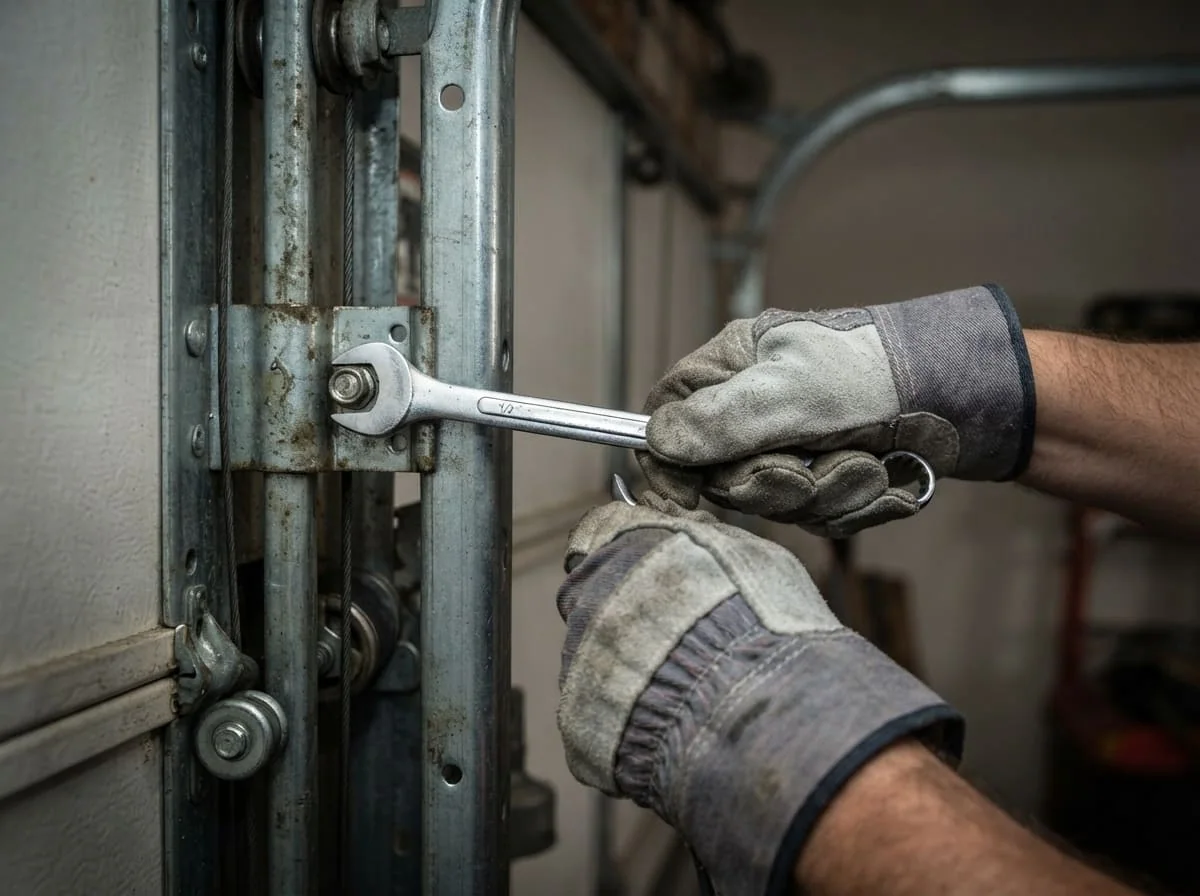
When you call about a broken spring, we start by getting a sense of your door — age, whether it's a single wide door or two singles, torsion or extension springs, and how it's been behaving — so the tech shows up with the right spring size and hardware. On site, we inspect the full spring system, not just the failed spring itself, since cables, drums, and bearings sometimes take damage when a spring lets go.
We always provide a free upfront quote before any work starts, so you know what you're agreeing to before we touch anything. Most broken-spring calls are resolved in a single visit.
Why Peoria Homeowners Call Us for Spring Repair
Danny started this company in 2015 specifically because he watched a Chicago-based employer treat the Peoria market as an afterthought — routes padded with far-flung stops, a callback that should've been same-day stretching into two or three days. He and Ray Petrovic built Peoria Garage Door Repair Guys to actually answer the phone and show up when they say they will, for a job like this one where a stuck-open or stuck-shut door isn't something you want to sit with for days.
Our techs are insured and background-checked, we quote before we work, and we carry spring stock sized for the doors common across the West Bluff, Uplands, and the wider Tri-County Area, so a same-day fix is realistic for most calls, not just a promise.
What to Expect When You Call
Call and describe the problem
Tell us what you heard or saw, and any details you know about your door, so we bring the right spring size.
Free upfront quote
A technician inspects the spring system on site and gives you a clear quote before any work begins.
Full system check
We check cables, drums, and bearings for damage the spring failure may have caused, not just the spring itself.
Spring replacement and balance
We install the correctly sized spring and balance the door so the opener isn't left straining against uneven weight.
Test and walk-through
We run the door through several cycles and walk you through what we did before we leave.
Broken Spring Repair in Peoria, IL FAQs
How do I know if my garage door spring is broken?
The clearest sign is a loud bang followed by a door that won't open, or only opens partway before the opener stalls. A visible gap in a torsion spring above the door, or a door that suddenly feels much heavier to lift by hand, are also strong signs.
Can I replace a garage door spring myself?
We'd recommend against it. Torsion and extension springs store significant force, and setting the correct tension requires specific tools and experience — an incorrect wind can cause injury or leave the door unbalanced and harder on the rest of the hardware.
Why do springs break more often in winter?
Cold makes steel more brittle, so a spring that's already near the end of its cycle life is more likely to fail during a hard freeze. We see a real jump in broken-spring calls in Peoria once winter temperatures settle in.
Do you replace one spring or both?
On a two-spring torsion system, we'll inspect both springs and talk through the tradeoffs with you — many homeowners choose to replace both at the same time since they're typically installed together and wear at a similar rate, but that's your call after we explain what we're seeing.
How long does a broken spring repair take?
Most broken-spring calls are resolved in a single visit, assuming we have the right spring size on the truck, which is why we ask a few questions about your door when you call.
Is a broken spring an emergency?
It's not a fire-or-safety emergency in most cases, but a door stuck open leaves your garage exposed and a door stuck shut can block a vehicle in, so we treat it as a same-day priority whenever we can.
How much does spring replacement cost?
It depends on your door's size, spring type, and whether one or both springs need replacing, which is exactly why we give a free upfront quote after inspecting your specific setup rather than quoting blind over the phone.
Need Broken Spring Repair in Peoria, IL?
Peoria Garage Door Repair Guys is ready to help — call now for a free, upfront quote.