
Noisy Garage Door Repair in Peoria, IL
Grinding, popping, or squealing every time the door moves isn't just annoying — it's usually a part telling you it's wearing out. We'll find the source and fix it.
- Locally owned since 2015
- Insured, background-checked techs
- Free upfront quotes
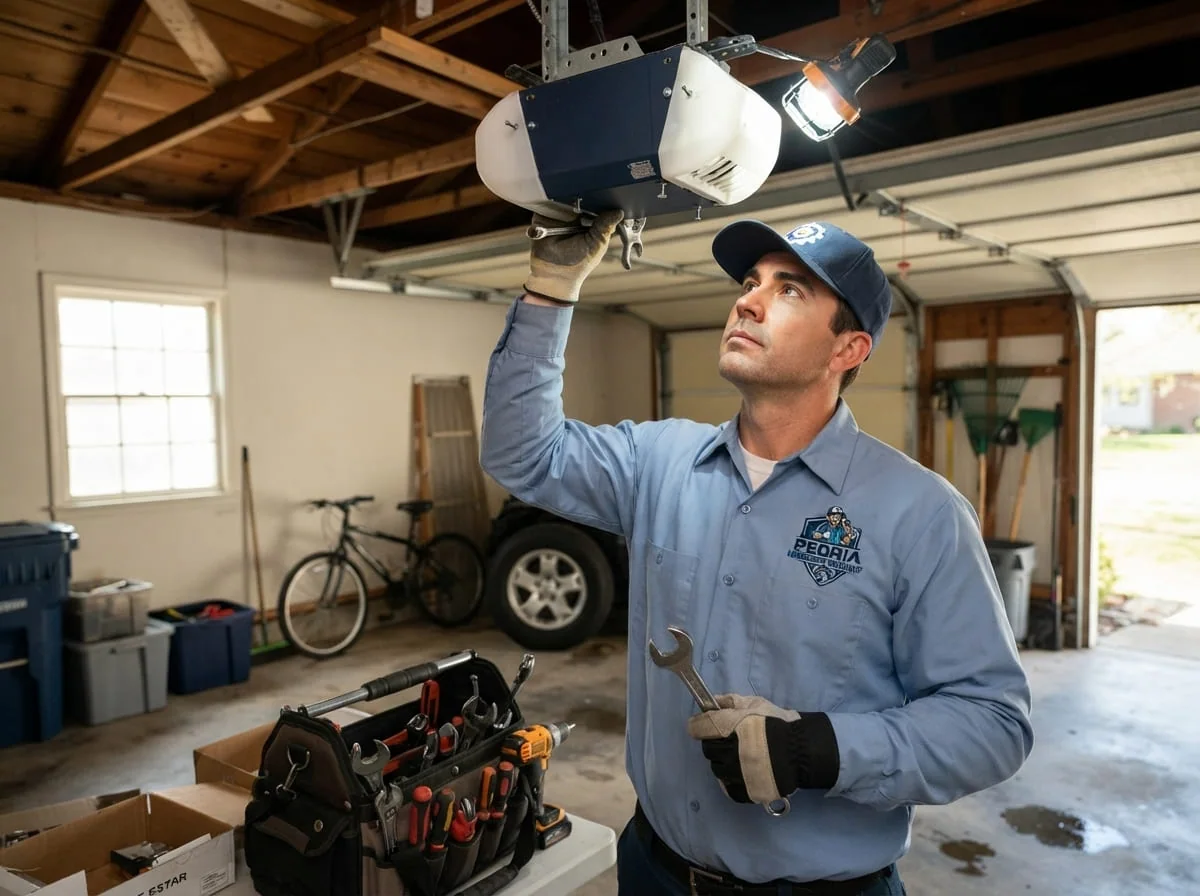
A garage door that's suddenly loud didn't get that way overnight. Rollers wear down and start to flat-spot, hinges dry out and start to bind, hardware backs out a quarter-turn at a time until brackets are rattling against the jamb. By the time it's loud enough to notice from inside the house, something has usually been degrading for months. The noise itself is rarely the actual problem — it's a symptom pointing at worn rollers, a stretched or misaligned track, dry hinges, loose fasteners, or a spring that's starting to fail.
Here in Peoria, that wear gets accelerated by our weather. A cold snap along the Illinois River stiffens grease and contracts metal parts just enough to change how they fit together, which is exactly when a lot of homeowners first notice a new squeal or a bang on the way up. Older homes in neighborhoods like West Bluff, with garages that have been through decades of Peoria winters, often carry original hardware that's simply past its service life.
Our crew runs a real diagnostic on every noise call instead of guessing — we watch the door cycle, listen for where in the travel the sound happens, and check rollers, hinges, track alignment, and spring condition before recommending anything. Most noisy-door calls get fixed same visit with lubrication, hardware tightening, or a roller and hinge swap; a smaller share point to something more serious like a track that's bent or a spring nearing the end of its life, which we'll flag honestly rather than patch over.
Signs Your Garage Door Noise Needs a Look
Not all garage door noise means the same thing, and the specific sound is usually the first clue about what's wearing out. We ask about this on every call before we ever pull into the driveway.
- Metal-on-metal grinding — often worn rollers, a dry opener gear, or a chain that's lost tension.
- High-pitched squealing — almost always dry hinges or roller bearings that need lubrication or replacement.
- Rattling or clattering during travel — loose hardware: track brackets, hinge bolts, or roller shaft nuts that have backed out over time.
- A loud bang or pop, especially near the top of travel — can mean a spring under stress, which is not a sound to ignore.
- A rhythmic thump once per rotation of the door — usually a flat-spotted roller hitting the track on every pass.
If the noise showed up gradually, it's wear. If it showed up suddenly and got worse fast, that's more often a sign of something failing rather than just aging.
What's Actually Causing the Noise
We trace garage door noise back to a handful of usual suspects, and most doors have more than one contributing at once by the time someone calls us.
- Worn or flat-spotted rollers — steel or nylon rollers develop flat sides after years of cycling, so instead of rolling smoothly they thump against the track.
- Dry hinges and bearings — factory lubrication doesn't last forever, and once metal is running dry against metal, it squeals.
- Loose fasteners — every open-and-close cycle puts a little vibration into track brackets and hinge bolts; over a few thousand cycles, some of them work loose.
- Track misalignment — a track that's shifted even slightly out of parallel makes the door bind and chatter as it travels.
- An aging opener — a worn drive gear, a chain that needs tensioning, or a belt-drive unit losing tension can all add their own grinding or slapping sound on top of whatever the door hardware is doing.
Because a few of these can overlap, we check the whole system on a service call rather than just tightening the first loose bolt we find.
Why DIY Noise Fixes Often Backfire
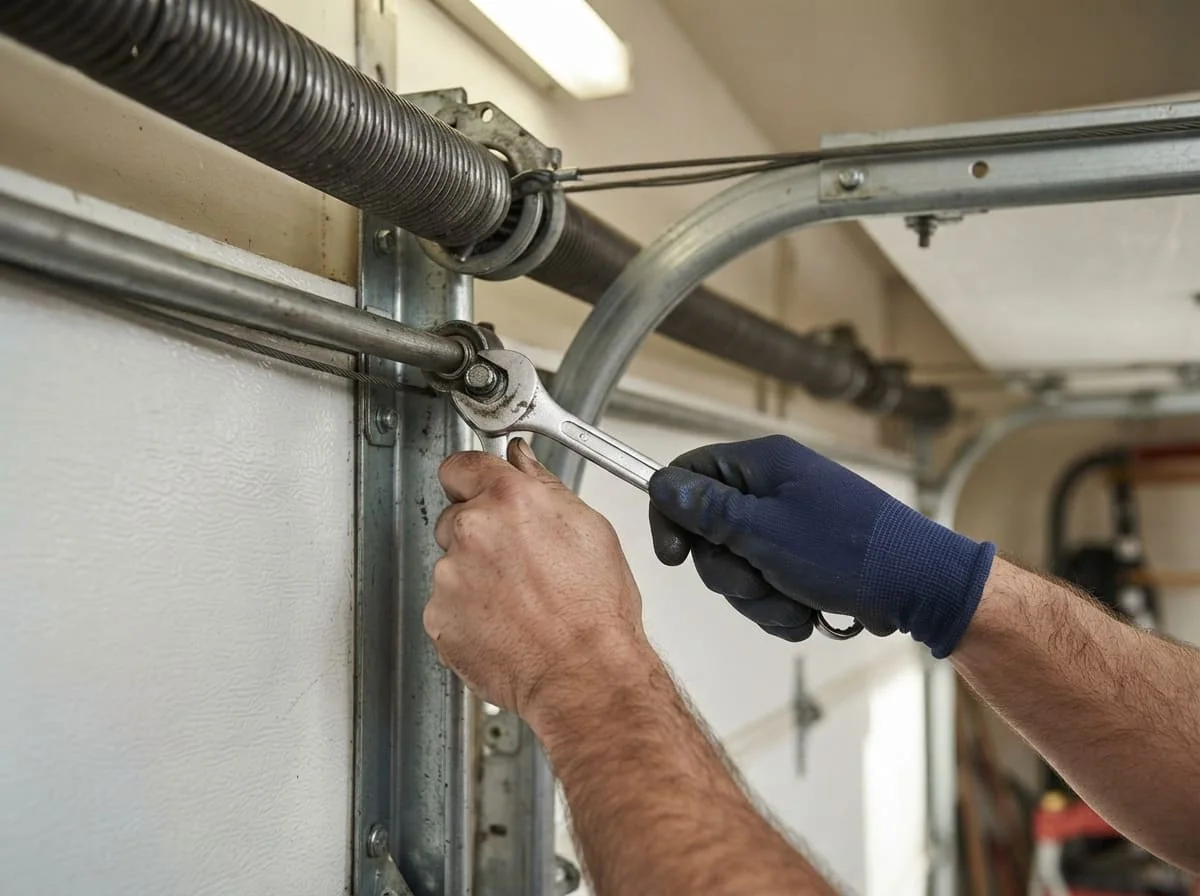
A quick spray of household oil on a squealing hinge is a reasonable first step, and it genuinely does help in a lot of cases — but it treats the symptom, not the cause, and the wrong lubricant on the wrong part can actually make things worse. Household oils and degreasers attract dust and grit, which turns into a gritty paste on rollers and hinges within a few months and accelerates the exact wear that caused the noise in the first place.
The bigger risk is what's near the noise. Garage doors run on torsion or extension springs holding enormous stored tension, and a homeowner tightening a bracket or adjusting a track near that spring system without knowing what they're looking at can get seriously hurt. If the noise is coming from anywhere near the spring assembly, or if the door has started binding or moving unevenly along with the noise, that's a job for someone who works on these every day, not a weekend fix.
How Peoria Winters Make Garage Door Noise Worse
Central Illinois puts a garage door through real seasonal stress. Peoria winters bring roughly 26 inches of snow a year and stretches of hard cold, and that cold does two things to an aging door at once: it stiffens grease and lubricant so hinges and rollers move drier than they would in summer, and it contracts metal components just enough to change how tightly hardware fits. That's why a lot of noise complaints we get show up first thing on a cold morning and quiet down some once the door has cycled a few times and things warm up slightly.
Humidity swings the other direction in summer months, which can affect wood-trimmed doors and door seals. Between the two, Peoria-area garages tend to need hardware attention on a more regular cycle than a door sitting in a mild, dry climate would.
Why Peoria Homeowners Call Us for Noise Calls
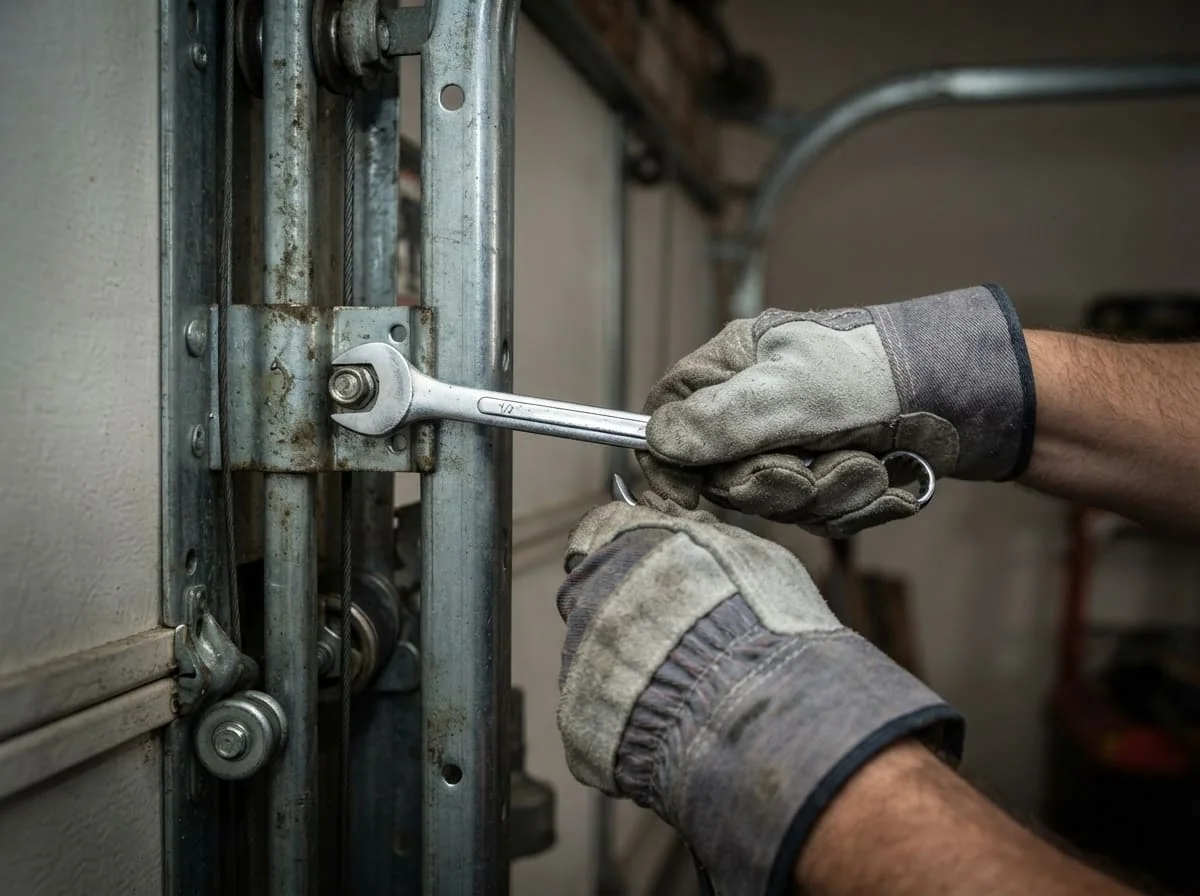
Danny Kowalski started this company in 2015 with his friend Ray Petrovic specifically because Peoria homeowners were an afterthought for the bigger companies both of them used to work for — routes padded out with far-flung stops, a callback that took days instead of the same day it would've gotten in a market the company actually prioritized. We built this outfit to answer our own phone and show up on time, for a noise complaint the same as a full-blown door-off-track emergency.
We're straightforward about what a noise actually is once we've looked at it — if it's a quick fix with lubricant and a bracket tightening, that's what we'll tell you, with no-surprise pricing either way. If it points to something bigger, like a spring nearing failure, we'll explain exactly what we're seeing and why. Every technician who shows up is insured and background-checked, and we stand behind the work we do.
What to Expect When You Call
Describe the noise
Call us and tell us what it sounds like and when it happens — that alone helps us show up with the right parts on the truck.
On-site diagnostic
We cycle the door, listen to where in the travel the sound occurs, and check rollers, hinges, track alignment, hardware, and spring condition.
Explain what we found
You get a plain-language explanation of the cause and a free upfront quote before any work starts.
Repair and lubricate
We tighten hardware, replace worn rollers or hinges, realign track, or address whatever the diagnostic points to.
Test the full cycle
We run the door through several open-close cycles to confirm it's quiet and moving smoothly before we leave.
Noisy Garage Door Repair in Peoria, IL FAQs
Is a noisy garage door actually a problem, or just annoying?
It depends on the sound. Squealing or light rattling is often just wear that's fine to schedule normally, but grinding, banging, or a sudden new noise near the spring area can mean a part is close to failing and shouldn't wait.
Can I lubricate my own garage door to quiet it down?
Light maintenance lubrication on rollers and hinges is a reasonable homeowner task, but avoid spraying the springs themselves or working near them, and skip household oils that attract dust — if the noise doesn't clear up after lubricating, that points to a worn part rather than a dry one.
Why does my garage door get louder in the winter?
Cold weather stiffens lubricant and slightly contracts metal hardware, both of which make an already-worn part squeal or grind more than it would in warmer months. It's very common across Peoria-area garages once temperatures drop.
Will replacing my rollers actually fix the noise?
In a lot of cases, yes — flat-spotted or worn rollers are one of the most common noise sources we find, and swapping them along with lubricating hinges and tightening hardware resolves most routine noise calls in a single visit.
How long does a noise diagnostic and repair visit take?
Most noise calls are diagnosed and resolved in a single visit once we're on site, though the exact time depends on what we find and whether parts need replacing.
Could the noise be coming from my garage door opener instead of the door itself?
Yes — a worn drive gear, loose chain, or aging belt-drive unit can add its own grinding or slapping noise on top of anything happening with the door hardware, which is why we check the opener as part of a full diagnostic.
Should I keep using the door if it's making noise?
Light wear noise is generally fine to keep using while you schedule a repair, but stop using the door and call us if you hear a loud bang, see visible sagging, or notice it moving unevenly — those can point to a spring or cable issue.
Need Noisy Garage Door Repair in Peoria, IL?
Peoria Garage Door Repair Guys is ready to help — call now for a free, upfront quote.