
Insulated Garage Doors and Illinois Winters
R-value numbers on garage doors get thrown around loosely. Here's what the number actually measures, what it's worth in a Peoria winter, and what insulation alone won't fix.

Why R-Value Even Matters on a Peoria Garage Door
Every winter we get calls from people who assume their garage door is just a big piece of metal that opens and closes, and then they touch the wall that separates the garage from the kitchen or the laundry room and it's cold to the touch. In a lot of Peoria homes, especially the older housing stock around West Bluff and Uplands, the garage shares at least one wall with living space, and the door itself is the single largest gap in that wall system. Peoria sits in a humid continental climate — cold, snowy winters with an average of roughly 26 inches of snow a year, plus stretches of sub-zero wind chill that show up most winters at some point. An uninsulated garage door doesn't just make the garage cold. It turns the garage into a cold-air reservoir sitting right against your house, and that affects the rooms next to it more than most homeowners expect.
This is where R-value comes in. R-value is a measure of resistance to heat flow — the higher the number, the slower heat moves through the material. It's a familiar concept from attic insulation and wall cavities, and garage door manufacturers borrowed the same language. But a garage door isn't a static wall assembly; it's a moving panel with seams, hinges, and a bottom seal that has to meet a concrete floor in every kind of weather. That's exactly why the R-value conversation around garage doors gets murkier than it does for insulation you'd staple between studs, and why it's worth understanding before you shop for a new one.
What R-Value Actually Measures — and Why the Sticker Number Isn't the Whole Story
Here's the part that trips people up: R-value can be measured for just the foam core of a door panel, or it can be measured for the whole assembled door — steel skins, foam, edge seals, and all — under actual test conditions. Those are two very different numbers, and a foam-core rating will almost always look more impressive on paper than the tested performance of the finished product hanging in an opening.
DASMA Technical Data Sheet 190 is the industry's standardized test method for thermal transmittance and air infiltration in garage doors — it exists specifically so a whole-door R-value can be measured and compared consistently instead of every manufacturer quoting the number that flatters them most. When we're helping someone compare doors, the first question we ask is whether the R-value they're looking at is a whole-door number tested to that kind of standard, or a foam-core number pulled from a spec sheet. It's a fair question to ask any door professional, and a legitimate one should have a straightforward answer.
None of this means R-value is meaningless — it's a real, physical property and it does correlate with how much heat a door lets through. It just means the number by itself, without knowing how it was measured, tells you less than it looks like it tells you.
How Garage Doors Are Built, Layer by Layer
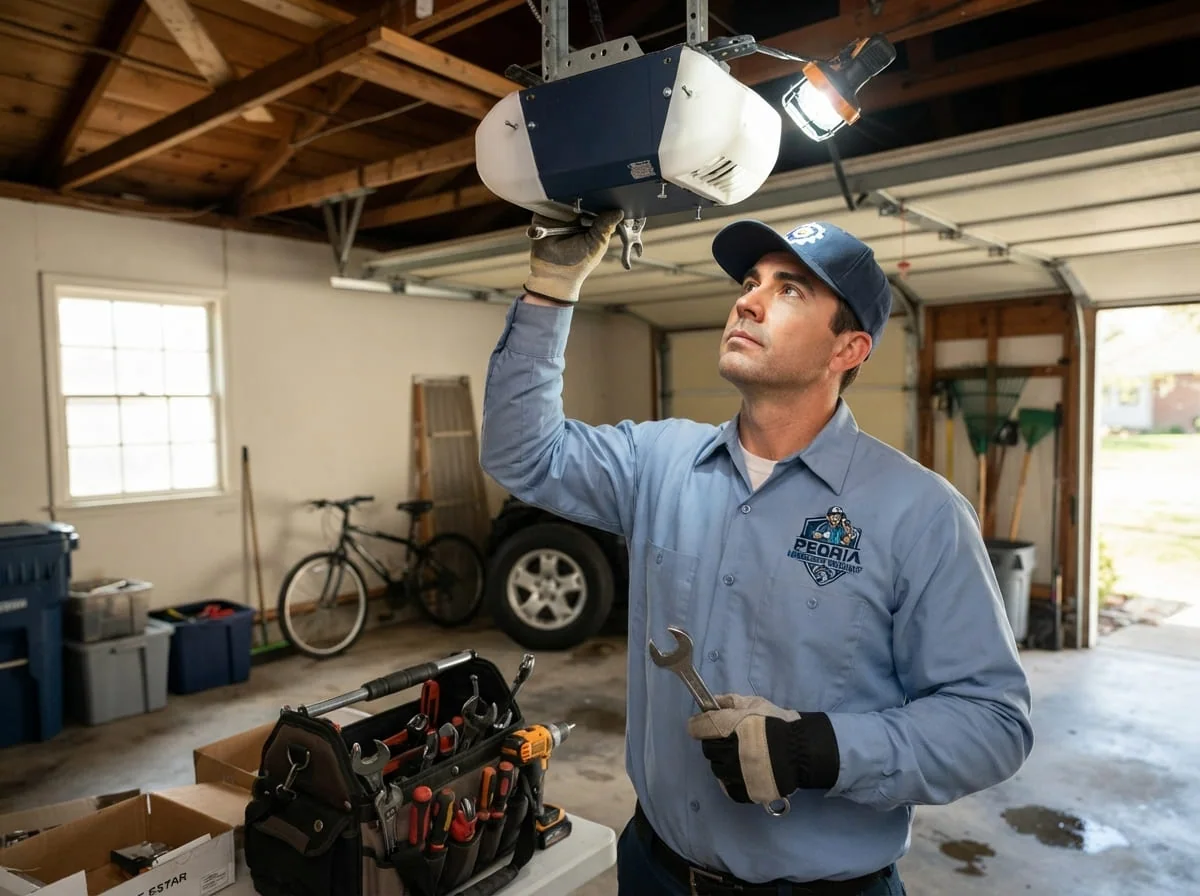
Setting aside brand names entirely, garage doors on the market break down into three basic construction types, and the difference between them is mostly about how many layers of material stand between your garage and the outside air.
| Construction type | Basic build | Typical thermal performance |
|---|---|---|
| Single-layer | A single skin of steel or aluminum, no insulating core | Essentially none — the door is a heat sink, not a barrier |
| Double-layer | An outer steel skin with a foam layer (often expanded polystyrene) laminated to the back | Modest — noticeably better than single-layer, but limited by the lack of an inner skin |
| Triple-layer (sandwich) | Steel skin, foam core (commonly injected polyurethane), inner steel skin, usually with a thermal break at the edges | Higher — this is the construction type where whole-door testing tends to show the biggest gains |
A lot of the older single-layer doors we replace around West Bluff and the Uplands date back decades — they were never insulated to begin with, which was normal when they were installed and simply isn't adequate anymore for a garage that shares a wall with living space. On the flip side, some of the newer, builder-grade doors going up on spec homes in growing areas like Dunlap are double-layer doors chosen to hit a price point, not necessarily the higher-performing triple-layer sandwich construction. Knowing which category a door falls into — and asking directly rather than assuming from the price tag — is most of the battle.
What a Higher R-Value Actually Buys You Through a Peoria Winter
The honest answer is: it depends heavily on whether your garage is attached and whether it shares wall or ceiling area with conditioned living space. If you've got a detached garage out back that you use for storage and parking, a higher R-value door mostly just means the garage itself stays a bit warmer and the concrete floor doesn't turn into an ice rink as fast — nice, but not something that shows up on a heating bill.
If your garage is attached, especially with a bedroom, laundry room, or finished space above or beside it, the calculation changes. That shared wall is doing the work of an exterior wall whether it was built for it or not, and the door is the weakest link in it by a wide margin. A door that resists heat transfer better keeps the garage itself closer to ambient outdoor-adjacent temperature instead of swinging with every cold front, which reduces the temperature differential the adjoining wall has to deal with. It also matters for anything you've got routed through that garage — supply lines, a water heater, a laundry hookup — because a garage that dips well below freezing for days at a stretch during a hard Peoria cold snap is a real freeze risk for anything not designed to sit in unconditioned space.
The Weak Points Insulation Alone Doesn't Fix
This is the part that gets skipped in a lot of sales conversations: a high R-value door installed with worn-out seals is still a drafty door. Insulation resists heat transfer through the panel itself. It does nothing about air leaking around the panel. Before you assume a new insulated door will solve a cold garage, walk the perimeter of your current door and check these:
- Bottom seal (astragal): the rubber gasket along the floor is the single biggest air-leak point on most doors. If it's cracked, flattened, or doesn't sit flush against the slab, cold air and even blown snow gets under it regardless of what the panel is rated.
- Side and top weatherstripping: the vinyl or rubber strip in the track and along the header that the door closes against. It hardens and cracks with age and UV exposure faster than most people expect.
- Threshold seal: an add-on strip at the floor that some installers include and others skip — worth asking about directly.
- Header and jamb gaps: especially on older openings where the framing has settled slightly over the years, common in some of the historic housing around West Bluff.
- Windows in the door, if it has them: older single-pane inserts lose heat fast no matter how good the panel insulation is.
We've walked into more than one job where the homeowner was ready to spend on a full replacement when new weatherstripping and a bottom seal would have solved most of the actual draft. It's worth having that looked at honestly before assuming the panel is the problem.
Cold, Springs, and Openers: Why Insulation Isn't a Standalone Fix
Insulated doors also tend to be heavier than single-layer doors, simply because of the extra steel skin and foam fill, and weight is exactly what the torsion spring system is calibrated against. If you're upgrading from a single-layer door to a heavier double- or triple-layer door, the spring setup needs to be matched to the new weight — this isn't optional, it's how the door stays balanced and how the opener isn't straining against it every cycle.
Cold weather adds its own separate stress on top of that. Steel torsion springs lose some flexibility as temperatures drop, and the years of cycling combined with a hard freeze is a common reason a spring finally lets go on the coldest morning of the year rather than a mild one — we've written more on the mechanics of that in our piece on why garage door springs break in winter. The upshot for anyone insulating or replacing a door heading into a Peoria winter: have the spring system evaluated at the same time, not as an afterthought once the new door is already hung.
Retrofit Insulation Kit or a New Door? How to Decide
Foam insulation kits sized to fit inside an existing single-layer door's panels are a real option, and for some homeowners they're a reasonable middle step. They add a layer of foam behind the existing steel skin, which does improve the panel's own resistance to heat transfer somewhat. What they don't do is add an inner steel skin, upgrade the bottom seal or weatherstripping, or do anything for a door whose track, rollers, or hinges are already worn from age.
A full door replacement addresses the whole system at once — panel construction, edge seals, and current hardware condition — rather than one piece of it. As a rough rule of thumb: if the door itself is structurally sound, the seals are in decent shape, and you mainly want to knock the edge off a cold garage, a retrofit kit can be worth it. If the door is old enough that you're also dealing with worn seals, dented panels, or hardware that's due anyway, putting money into insulating a door you're going to want to replace within a few years rarely makes sense. We'll give you a straight answer on which situation you're in during a free upfront quote — there's no advantage to us in talking someone into a bigger job than they need.
What to Ask For When You Get a Quote
If you're comparing insulated doors from more than one company, a few specific questions cut through most of the marketing noise:
- Is the R-value quoted for the whole assembled door, or just the foam core?
- Was it tested to a recognized method like DASMA TDS 190, or is it a manufacturer estimate?
- Is it single-, double-, or triple-layer construction?
- Does the quoted price include new bottom seal and weatherstripping, or just the panel itself?
- Will the spring system be re-balanced for the new door's weight, and is that itemized separately?
We cover how to read the rest of a repair or installation quote line by line — including the parts that are easy to gloss over — in our guide on how to read a garage door repair quote. The short version here: a legitimate quote should be able to answer every one of those bullet points without hesitation, in plain language, with no-surprise pricing and no dollar figure that changes once the crew shows up.
Bottom Line for Peoria Homeowners
An insulated garage door is a genuinely worthwhile upgrade for most attached garages around here — Peoria's winters are long enough and cold enough that the difference is real, not marketing. But the R-value number by itself isn't the whole answer. Whether it's a whole-door number or a foam-core number, what construction type it actually is, and whether the seals and hardware around it are doing their job all matter as much as the rating on the sticker.
If you're weighing an older single-layer door in an established West Bluff-area home against a full replacement, or wondering whether your newer double-layer door in a place like Dunlap is actually pulling its weight, we're happy to walk through it in person. Danny and the crew — Ray included — have looked at enough of these doors around the Tri-County Area to give you a straight read on what's worth doing and what isn't. Give us a call and we'll get you a free upfront quote with no pressure attached to it.

Danny Kowalski
Owner and lead technician at Peoria Garage Door Repair Guys, serving Peoria, IL since 2015.
FAQs
Will a higher R-value garage door actually lower my heating bill?
It depends mainly on whether your garage is attached and shares wall or ceiling area with living space. For an attached garage, the door is usually the weakest point in that shared wall, so improving it reduces the temperature swing the adjoining rooms deal with. For a detached garage used mainly for parking and storage, the benefit is a warmer garage rather than a measurable change on your utility bill.
What R-value should I be looking for in a Peoria climate?
There isn't a single mandatory number for garage doors the way there is for some building components, so the honest answer is to prioritize whole-door tested performance over a single target figure. ENERGY STAR publishes general guidance on efficient home upgrades that's a reasonable starting point, and for an attached garage here we generally steer people toward double- or triple-layer construction rather than a single-layer door, given how much of the year Peoria spends below freezing.
Is an insulated door worth it if my garage isn't heated?
It still helps — it slows how fast the garage cools down and how much condensation and frost build up on tools, vehicles, and stored items — but the payoff is smaller than in an attached, shared-wall situation. If the garage is fully detached with no living space nearby, some homeowners are just as well served by putting the money toward a well-sealed single- or double-layer door instead of the highest-rated option available.
Can I add a retrofit insulation kit instead of replacing the whole door?
Yes, for the right situation. A retrofit kit adds foam behind the existing steel skin and can meaningfully cut down on heat transfer through the panel. It won't add an inner steel skin or fix worn bottom seals, weatherstripping, or aging hardware, so it makes the most sense when the door itself is structurally sound and mainly under-insulated rather than generally worn out.
Does a heavier insulated door affect my springs or opener?
Yes. Double- and triple-layer doors weigh more than single-layer doors, and the torsion spring system has to be sized to that weight to keep the door balanced. If you're upgrading to a heavier door, the springs — and often the opener's drive strength — need to be matched to it at installation, not left as they were for the old door.
How do I know if the R-value listed for a door is accurate?
Ask whether it's a whole-door number tested to a recognized method like DASMA TDS 190, or a rating for just the foam core in isolation. A foam-core number will almost always look higher than the tested performance of the finished, installed door, so that one question is usually enough to tell you how much weight to put on the figure you're being quoted.
Have a Garage Door Problem Right Now?
Skip the guesswork — call Peoria Garage Door Repair Guys for a fast, honest diagnosis.