
Chain, Belt or Wall-Mount Openers: Which One Actually Fits Your Garage
Chain, belt, and wall-mounted jackshaft openers all lift the same door, but they solve different problems. Here's how to pick the right one for your house instead of just grabbing whatever's cheapest at the counter.
The Three Opener Types, and What Actually Sets Them Apart
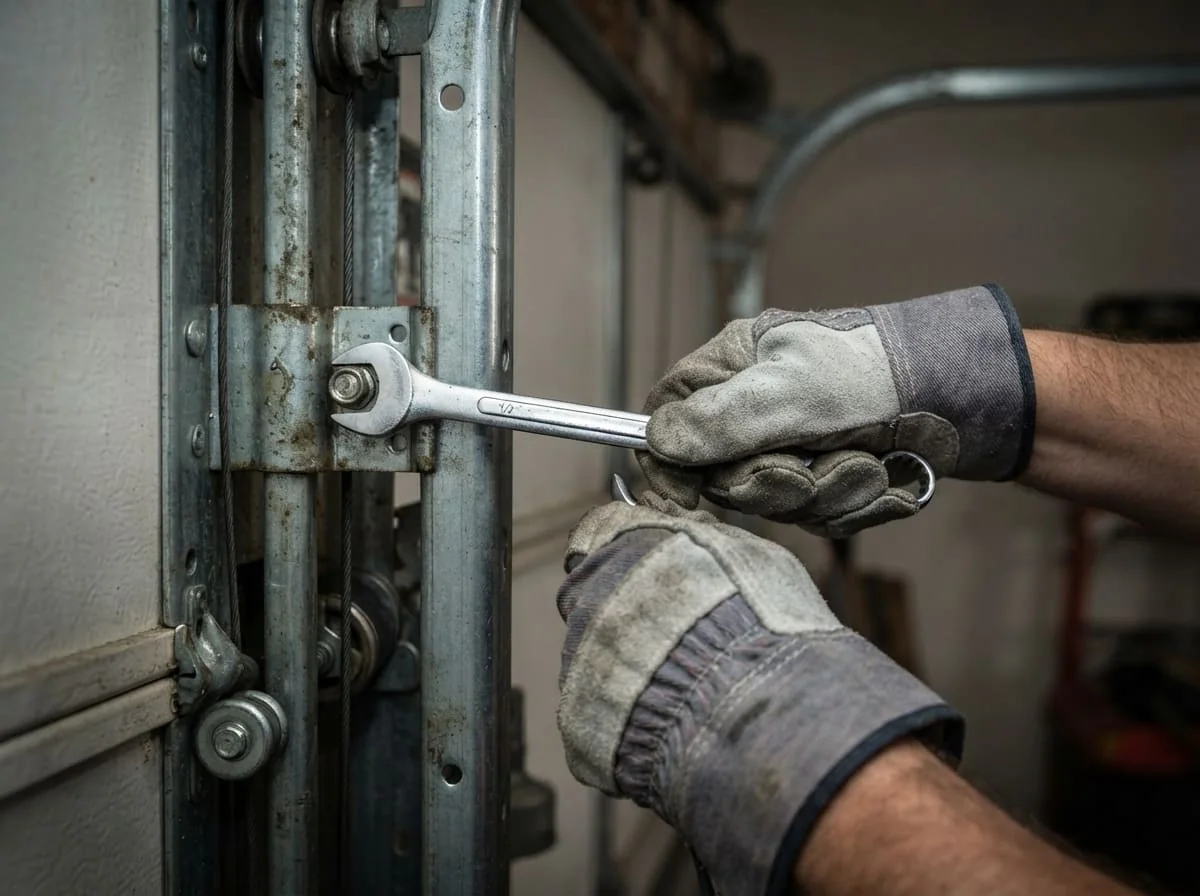
Every homeowner who calls us about a new opener eventually asks the same question in one form or another: chain or belt? What almost nobody asks about, until we bring it up, is the third option — a jackshaft opener that mounts to the wall beside the door instead of overhead. All three do the identical mechanical job of pulling a trolley along a rail (or, in the jackshaft's case, turning the torsion bar directly) to raise and lower a sectional door. The difference isn't in whether they work. It's in the tradeoffs each design makes, and those tradeoffs matter a lot more once you know your own garage's layout, your household's tolerance for noise, and how long you plan to own the house.
We've installed all three types across the West Bluff, Uplands, and out through the Tri-County Area for over a decade now, and the honest answer is there's no universally "best" opener. There's a best opener for a detached garage with nothing living above it, a best one for a bedroom that shares a wall with the garage, and a best one for a two-car garage where someone actually wants to park a workbench or a kayak rack from the ceiling joists. This guide walks through all three so you're not picking blind, or worse, picking based on whatever the big-box store happened to have in stock that week.
Chain-Drive Openers: The Workhorse
A chain-drive opener uses a metal chain, similar in concept to a bicycle chain, to pull the trolley that connects to your door's arm. It's the oldest of the three drive mechanisms still in common use, and it's stuck around this long for a reason: it's mechanically simple, it's the most affordable option on the market, and it holds up to heavy, repeated use about as well as anything we install.
The tradeoff is noise. Metal-on-metal contact and a chain running over a sprocket transmits vibration into the rail and the header bracket, and that vibration carries into the house more than people expect — especially on older homes around West Bluff where the garage sits directly under or beside a bedroom or a home office. If your garage is detached, or it's attached but sits under a mudroom, laundry room, or unfinished space rather than a room where someone sleeps or works, a chain-drive opener is often the smart, budget-conscious pick. It'll lift a heavier double-car door reliably for years, and the extra noise simply doesn't reach anyone who'd notice it.
We still see plenty of chain-drive units that have run for well over a decade with nothing more than routine lubrication and the occasional force-setting adjustment. It's not a lesser opener — it's a different set of priorities, and for a lot of Peoria garages those priorities line up fine.
Belt-Drive Openers: Built for Quiet
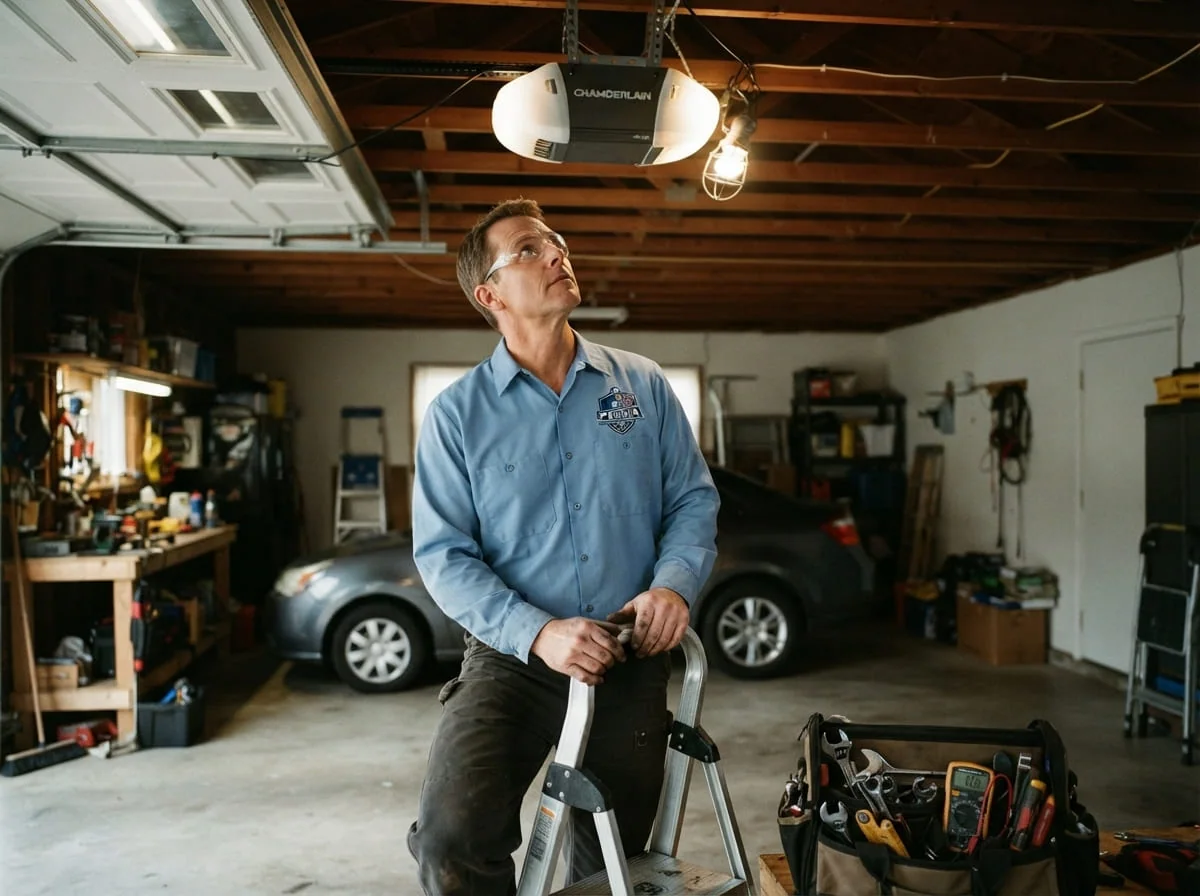
A belt-drive opener does the identical job as a chain-drive unit but uses a reinforced rubber or polyurethane belt instead of a metal chain to move the trolley. There's no metal-on-metal contact, which is the entire point — belt-drive units run noticeably quieter, and the vibration that does transmit into the rail is far more muted than a chain running over a sprocket.
That quiet operation is exactly why belt-drive has become the default recommendation for a lot of the two-story homes we work on around West Bluff and Uplands, where the garage is directly beneath or beside a bedroom. Anyone who's been startled awake at 6 a.m. by a chain-drive opener grinding open two floors below understands the appeal immediately. The same logic applies to a home office over the garage, or a nursery on the other side of that shared wall — belt-drive earns its modest price premium back in a hurry for households in that situation.
Cost is the real tradeoff. Belt-drive units typically run a bit more than a comparable chain-drive opener, and while the belts themselves are durable, they're not literally indestructible the way a steel chain is — extreme cold can make some belt materials stiffer, though this is a minor factor for an insulated garage and not something we'd talk a homeowner out of a belt-drive purchase over. For most households where noise actually matters, it's worth the difference.
Jackshaft (Wall-Mount) Openers: Built for Space
A jackshaft opener is the one most homeowners haven't heard of until we bring it up during a quote. Instead of mounting a motor unit and running a rail across the ceiling, a jackshaft opener mounts directly to the wall beside the door and turns the torsion bar itself to raise and lower the door. There's no overhead rail at all.
The obvious benefit is ceiling space. If you've ever wanted to hang a storage rack, run a car lift, install a ceiling-mounted bike pulley system, or just park a truck with a roof rack or ladder rack without clearance worries, a jackshaft opener frees up that entire overhead zone in a way chain- and belt-drive units simply can't. It's also the right call on garages with limited headroom, where a standard rail-mounted opener's trolley and rail assembly wouldn't clear the door track or an overhead obstruction in the first place.
The tradeoff is installation complexity and, usually, cost. A jackshaft opener has to be matched correctly to your torsion spring system, and it requires the door's spring setup to be in solid working condition since the opener is now driving that shaft directly rather than pulling a trolley along an independent rail. This is not a unit we'd recommend installing on a door with tired, unbalanced, or near-end-of-life torsion springs — the mismatch can strain the opener and the spring system both. For the right garage, though, a jackshaft is the cleanest, quietest option of the three, since the motor itself sits off to the side rather than centered over your head.
Side-by-Side Comparison
| Opener Type | Noise Level | Relative Cost | Ceiling Space Used | Best Fit |
|---|---|---|---|---|
| Chain-drive | Loudest of the three | Lowest | Full rail overhead | Detached garages, unfinished space above |
| Belt-drive | Quietest rail-mounted option | Moderate | Full rail overhead | Garages under or beside bedrooms/living space |
| Jackshaft (wall-mount) | Quiet — motor is off to the side | Highest, plus install complexity | None — ceiling stays clear | Low headroom, storage-focused garages, workshops |
None of these numbers are absolute — a well-maintained chain-drive opener on solid hardware can run quieter than a neglected belt-drive unit with worn rollers elsewhere on the door. The table is a starting point for the conversation, not the final word, which is why we still walk every homeowner through their specific garage before recommending anything.
How Peoria's Climate and Garage Layouts Change the Decision
Central Illinois winters put real demands on every part of a garage door system, and the opener is no exception. Cold snaps stiffen up grease in rollers and hinges, and an unheated, uninsulated garage — common in a lot of the older detached garages around West Bluff and the Uplands — means the opener is frequently working against a door that's fighting stiffer hardware than it would in July. That extra strain doesn't discriminate by opener type, but it does mean whichever opener you choose needs its force settings checked and adjusted seasonally rather than set once and forgotten.
Layout matters just as much as climate here. A lot of homes in the Tri-County Area, especially newer construction out in Dunlap or Germantown Hills, are built with bonus rooms or home offices directly over an attached garage — exactly the situation where belt-drive earns its keep. Meanwhile, older homes with detached garages, which are common throughout Averyville and parts of North Valley, often don't have that noise concern at all, making a straightforward chain-drive opener the more cost-effective choice. We don't recommend a single "upgrade everyone should make" — we look at what's actually next to and above the garage in question.
What Actually Determines the Right Choice for Your Garage
Strip away the marketing and the decision usually comes down to a short list of real factors:
- What's on the other side of the garage wall or ceiling. A bedroom, nursery, or home office above or beside the garage points strongly toward belt-drive or jackshaft. A detached structure or unfinished storage space above makes chain-drive a perfectly sound, budget-friendly choice.
- How much you need the ceiling. If overhead storage, a car lift, or low headroom is a factor, jackshaft is worth the extra installation cost.
- The condition of your existing torsion springs and hardware. A jackshaft opener asks more of your spring system than a rail-mounted unit does, so it's not the right call on a door with worn or aging springs without addressing those first.
- Budget. Chain-drive remains the most affordable entry point; belt-drive adds a modest premium for quiet; jackshaft carries the highest total cost between the unit itself and the more involved install.
- How long you plan to stay in the house. A jackshaft's ceiling-space benefit and a belt-drive's quiet operation are investments that pay off over years of daily use, which matters more if you're not planning to move soon.
If you're also dealing with a door that's on its last legs alongside an aging opener, it's worth reading through our guide on repairing versus replacing a damaged garage door panel before committing to a new opener purchase, since pairing a brand-new opener with a door that needs its own attention rarely ends well.
Installation and Safety Considerations We Won't Skip
Whichever drive type you land on, the installation itself matters as much as the choice between chain, belt, and jackshaft. Every opener we install gets its travel limits and force settings calibrated to the specific door it's lifting — not a generic factory default — and the photo-eye safety sensors get aligned and function-tested before we consider the job finished. Force settings that are too aggressive are a real entrapment hazard, particularly for children, pets, and parked vehicles, and it's one of the most common issues we find on DIY opener installs when we're called out afterward for a follow-up repair.
The U.S. Consumer Product Safety Commission has documented entrapment injuries tied specifically to improperly adjusted opener force settings and missing or misaligned safety sensors, which is part of why we treat this as a non-negotiable step on every install rather than an optional extra. DASMA's technical data sheets also lay out the safety reversal and sensor standards that reputable openers of all three drive types are built to meet — standards we test against directly, not just trust on paper.
Jackshaft installations carry one additional consideration worth flagging clearly: because the opener drives the torsion bar directly, the spring system has to be properly balanced and in good condition before the opener ever gets connected. We check spring condition and door balance as a standard part of every jackshaft quote, and we'll say so plainly if a door's springs need attention first — sometimes that means a straightforward spring repair or replacement ahead of the opener install rather than trying to make an aging spring system work harder than it should.
Our Recommendation Process
We don't sell openers off a script. When Danny or one of our techs comes out for an opener quote, we look at what's next to and above the garage, check the condition of the existing springs, cables, and tracks, measure the door's actual weight and size, and ask about your household's tolerance for noise before recommending anything. Sometimes that means a straightforward chain-drive replacement that costs less and does the job perfectly well. Sometimes it means steering a homeowner toward belt-drive because their teenager's bedroom sits directly above the garage. Once in a while it means a jackshaft, when ceiling space is genuinely the deciding factor and the door's hardware can support it.
Full garage door opener installation from our crew includes that assessment as a standard part of the visit, along with a free upfront quote before any work starts — no dollar figure gets thrown out until we've actually seen your door and garage in person. If your current opener is still salvageable rather than due for replacement, our opener repair service is worth a call first; we'll tell you honestly which category your situation falls into.

Danny Kowalski
Owner and lead technician at Peoria Garage Door Repair Guys, serving Peoria, IL since 2015.
FAQs
Is a belt-drive opener really worth the extra cost over chain-drive?
It depends entirely on what's next to your garage. If a bedroom, nursery, or home office sits above or beside it, most homeowners tell us afterward it was worth every bit of the price difference. If your garage is detached or sits under unfinished space, chain-drive does the same job for less money and there's no real downside.
Can I replace a chain-drive opener with a jackshaft unit on the same door?
Sometimes, but it depends on your torsion spring system and header clearance. Jackshaft openers drive the torsion bar directly, so the springs need to be in good, balanced condition first. We check that as part of every jackshaft quote before recommending the switch.
Do jackshaft openers work on double-car garage doors?
Yes, jackshaft openers are available in capacities that handle both single and double-car doors, though the torsion bar and spring system need to be properly sized and in solid condition for the heavier double door. We verify this during the quote rather than assuming it'll work.
How much noisier is a chain-drive opener than belt-drive in practice?
It's a noticeable difference, not a subtle one — most homeowners can tell immediately when standing in a room near the garage. Whether that difference matters to you comes down entirely to whether living space sits next to or above the garage.
Will cold Peoria winters affect a belt-drive opener's belt over time?
Extreme cold can make some belt materials slightly stiffer, but for a properly installed unit in a typical residential garage this is a minor factor, not a reason to avoid belt-drive. Keeping the door and opener maintained through winter matters more than the drive type itself.
Do all three opener types have the same safety features?
Reputable openers of all three drive types include photo-eye safety sensors and adjustable force settings that meet current safety standards. What differs between chain, belt, and jackshaft is the drive mechanism and mounting, not the underlying safety technology.
Have a Garage Door Problem Right Now?
Skip the guesswork — call Peoria Garage Door Repair Guys for a fast, honest diagnosis.